
- Home
- Products
- Hot Sales
- About Us
- Application
- Support
- News
- Contact
Views: 0 Author: Site Editor Publish Time: 2026-10-21 Origin: Site


Specific rotation is widely used to characterize optically active substances in pharmaceutical, chemical, food, and research laboratories. However, the observed optical rotation alone is not enough to compare samples tested at different concentrations or path lengths.
To obtain a meaningful result, analysts must apply the correct specific rotation formula and record the measurement conditions. Sample concentration, tube length, temperature, wavelength, and sample preparation can all affect the result.
This guide explains how to calculate specific rotation for solutions and pure liquids, identify common sources of measurement error, and evaluate polarimeter features that support reliable testing and data management.
Table of Contents
Optical rotation and specific rotation are related, but they describe different values.
Observed optical rotation is the angle measured by a polarimeter when polarized light passes through an optically active sample. It is usually expressed in degrees.
The observed angle depends on factors such as sample concentration, optical path length, temperature, wavelength, and the sample's chemical properties. Therefore, raw optical rotation readings should not be compared directly unless the relevant test conditions are equivalent.
Specific rotation relates the observed angle to the sample concentration and optical path length under defined measurement conditions. It helps analysts compare results with reference values when the same conditions and calculation conventions are used.
Specific rotation is not independent of every experimental variable. Temperature, wavelength, solvent, and sample composition must be specified or controlled because they can influence the measured value.
A positive (+) result indicates dextrorotation, while a negative (−) result indicates levorotation under the instrument's reporting convention. These signs describe the measured direction of optical rotation.
The capital letters D and L describe a stereochemical configuration relative to a reference system. They do not predict whether a substance rotates polarized light in the positive or negative direction. A compound with a D configuration may be either dextrorotatory or levorotatory.
Term | Meaning | What it tells you |
|---|---|---|
Optical rotation (α) | Measured angle | The observed rotation under the test conditions |
Specific rotation ([α]) | Rotation related to concentration and path length | A value for comparison under defined conditions |
(+) / (−) | Direction of measured rotation | Positive or negative optical rotation |
D / L | Stereochemical configuration | Structural relationship to a reference configuration |
For a solution, a commonly used specific rotation formula is:
[α]ᵀλ = α / (l × c)
Where:
[α]ᵀλ = specific rotation at the stated temperature and wavelength.
α = observed optical rotation, in degrees.
l = optical path length, in decimeters (dm).
c = concentration, expressed in grams per milliliter (g/mL).
The concentration unit matters. If the laboratory expresses concentration in grams per 100 mL, the corresponding formula is:
[α]ᵀλ = (100 × α) / (l × c)
Always confirm the concentration convention specified by the applicable method or reference standard before calculating the result.
Suppose an analyst dissolves 5.00 g of a sample and makes the solution up to a final volume of 50.0 mL. The sample is measured in a 100 mm tube, and the observed rotation is +3.25°.
Step 1: Calculate concentration
c = 5.00 g / 50.0 mL = 0.100 g/mL
Step 2: Convert path length to decimeters
100 mm = 1 dm
Step 3: Apply the formula
[α]ᵀλ = +3.25° / (1 dm × 0.100 g/mL)
Result: +32.5°·mL·g⁻¹·dm⁻¹
The result should be reported with the measurement temperature and wavelength, along with any additional conditions required by the applicable method.
When measuring a pure liquid, the calculation may use density instead of solution concentration. A commonly used form is:
[α]ᵀλ = α / (l × d)
Where:
α = observed optical rotation, in degrees.
l = optical path length, in decimeters.
d = density of the liquid, in grams per milliliter (g/mL).
Density must correspond to the relevant measurement conditions. Since temperature can change liquid density, use a suitable density value and follow the applicable test method.
Do not use the pure-liquid formula for a dissolved solid. Confirm whether the sample is measured as a solution or as a neat liquid, and apply the formula and units specified for that method.
Specific rotation values must be associated with the temperature and wavelength at which they are measured. Results obtained under different conditions may not be directly comparable.
Temperature can affect the sample's optical rotation and, for solutions, may also affect volume and concentration. The magnitude and direction of these effects vary by substance and solvent.
For reliable comparisons, equilibrate the sample and measurement cell to the required temperature. If the test method specifies a temperature such as 20°C or 25°C, follow that requirement rather than assuming one temperature applies to every sample.
A polarimeter with temperature control can help maintain stable conditions. For example, Zhuoguang's GP60 automatic polarimeter lists built-in Peltier temperature control with a stated control range of 10°C to 50°C. Confirm that the model's range and control performance meet your method requirements.
Optical rotation depends on wavelength, a phenomenon known as optical rotatory dispersion. The sodium D line, at approximately 589 nm, is commonly used for specific rotation measurements. Other methods may specify different wavelengths.
Always record the wavelength and compare the result with a reference value measured under compatible conditions. A result obtained at one wavelength should not be assumed to match a value obtained at another.
Correct calculations cannot compensate for poor sample preparation or uncontrolled measurement conditions. Review the following sources of error when results vary or differ from reference values.
Errors in weighing, dilution, or final volume affect the concentration used in the formula. Use calibrated balances and suitable volumetric equipment, and follow the sample preparation procedure specified by the method.
Allow the sample and solvent to reach the required conditions before completing the final volume adjustment when the procedure calls for temperature equilibration. Mix the solution thoroughly and document the preparation details.
Temperature changes may affect both the sample and the measurement. Use the specified temperature, allow sufficient equilibration time, and verify temperature control where required.
The optical path length must match the value used in the calculation. Use the appropriate sample tube and inspect it for bubbles, leaks, contamination, or damage. Bubbles in the optical path can interfere with light transmission and cause unstable readings.
Clean the cell according to the manufacturer's instructions and fill it using a procedure that minimizes trapped air.
Some compounds, including certain sugars, can change their optical rotation over time after dissolution. This may occur as the sample approaches an equilibrium between different forms.
Follow the applicable method for dissolution, equilibration, and measurement timing. Do not add catalysts or other reagents to accelerate the process unless the procedure specifically allows and validates their use.
Observed issue | Possible cause | Recommended action |
|---|---|---|
Readings fluctuate | Bubbles, dirty cell windows, or unstable conditions | Inspect and refill the cell; check instrument stability |
Readings drift over time | Mutarotation or incomplete temperature equilibration | Follow the specified equilibration and timing procedure |
Calculated specific rotation differs from a reference | Incorrect concentration, path length, temperature, wavelength, or sample composition | Verify inputs and confirm that test conditions match |
Low light transmission | Cloudy sample, contamination, or unsuitable sample concentration | Inspect the sample and cell; prepare the sample as required by the method |
A digital polarimeter can reduce some manual steps, but instrument automation does not remove the need for good sample preparation, calibration, and method control.
Depending on the model, a digital polarimeter may measure optical rotation and calculate specific rotation or concentration using entered sample parameters. This can reduce manual arithmetic and transcription errors.
When comparing instruments, check which measurement modes are included, how concentration and path length are entered, whether units can be configured, and whether the calculation follows your laboratory's required convention.
Explore Zhuoguang's polarimeter product range to compare available models.
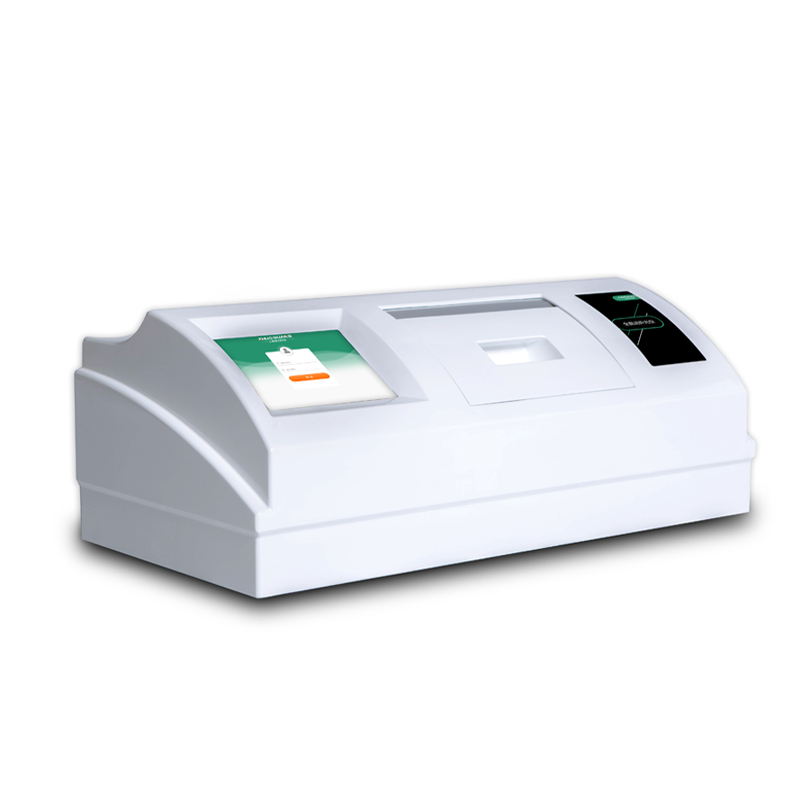
Zhuoguang GP20 fully automatic polarimeter. View the official GP20 product page for model-specific features and specifications.
Built-in temperature control can help maintain the conditions required by a method. Verify the control range, stated accuracy, compatible sample tubes, and temperature stability for the intended application.
Some models provide user management, stored methods, electronic signatures, or audit-trail functions. These features may support laboratory data-management requirements, but their availability and suitability depend on the model, software, configuration, and intended use.
For regulated work, assess the complete system and laboratory procedures against applicable requirements, including data review, access control, record retention, and validation. Do not assume that purchasing a digital instrument alone establishes compliance with 21 CFR Part 11 or other regulations.
An upgrade may be worth evaluating if the current process involves frequent manual calculations, repeated transcription, unstable temperature conditions, high sample volumes, or documentation requirements that the existing equipment cannot support.
Before choosing a new instrument, compare these factors:
Measurement requirements: Required rotation range, resolution, accuracy, wavelength, and temperature.
Sample throughput: Daily sample volume, measurement frequency, and time spent on sample preparation.
Calculation functions: Available modes for optical rotation, specific rotation, and concentration.
Data handling: Storage, export formats, user access, audit trails, and electronic signatures where required.
Calibration and service: Calibration procedures, reference standards, maintenance, and technical support.
A product demonstration using representative samples can help verify whether the instrument meets your measurement and workflow needs. Compare the results with your existing validated procedure before changing routine testing.
Specific rotation calculation requires the correct formula, consistent units, and controlled measurement conditions. For solutions, the calculation uses observed rotation, path length, and concentration. For pure liquids, density may be used instead of solution concentration.
Temperature, wavelength, sample preparation, bubbles, and sample changes can all affect results. A digital polarimeter may simplify measurement and calculation, while temperature control and data-management functions can support consistent laboratory workflows. However, instrument selection should be based on verified specifications and the requirements of the intended method.
For a solution with concentration expressed in g/mL, a common formula is [α]ᵀλ = α / (l × c). Here, α is observed rotation, l is path length in decimeters, and c is concentration in g/mL. Confirm the units and formula convention required by the applicable method.
Optical rotation is the observed angle measured by the polarimeter. Specific rotation relates that angle to concentration and path length under defined temperature and wavelength conditions, allowing comparison with compatible reference values.
Both can influence optical rotation. Results measured at different temperatures or wavelengths may not be directly comparable, so the measurement conditions should match the applicable method or reference value.
Possible causes include incorrect concentration, bubbles, a dirty cell, unsuitable path length, temperature variation, and time-dependent sample changes such as mutarotation. Check sample preparation and instrument conditions systematically.
Evaluate measurement range, resolution, accuracy, wavelength options, temperature control, automatic calculation modes, sample throughput, data management, calibration support, and compatibility with your laboratory's methods.


