
- Home
- Products
- Hot Sales
- About Us
- Application
- Support
- News
- Contact
Views: 0 Author: Site Editor Publish Time: 2026-10-05 Origin: Site


Selecting the right automatic titrator requires more than comparing instrument specifications. Laboratories need to match burette capacity, dosing performance, electrode compatibility, and automation level to their analytical methods and daily sample volume.
The right configuration can help improve workflow consistency, reduce routine manual tasks, and support reliable analytical results. This guide explains the key factors to evaluate before purchasing an automatic titrator.
Table of Contents
Start by reviewing your standard operating procedures (SOPs), sample types, daily workload, and required measurement performance.
Consider these questions:
What titration methods do you use, such as acid-base, redox, precipitation, complexometric, or non-aqueous titration?
How much titrant does a typical analysis consume?
How many samples must be processed per day or shift?
What level of dosing performance does the validated method require?
Which electrodes, data records, and software functions are necessary?
Sample properties also matter. Dark, cloudy, viscous, or non-aqueous samples may require a suitable electrode, sample preparation, or a different analytical method. Confirm compatibility with the instrument supplier before selecting a configuration.
An automatic potential titrator can automate titrant addition and endpoint evaluation for supported methods. The appropriate model depends on the laboratory's specific analytical requirements.
Burette capacity affects the amount of titrant that can be delivered in one stroke and the instrument's suitability for a particular method. Zhuoguang's GT80 product page lists 1 mL, 5 mL, 10 mL, 25 mL, and 50 mL burette options, with 10 mL as the standard configuration. Confirm the available options for the model you plan to purchase.
Begin by estimating the titrant volume required for a normal test. The selected burette should accommodate the expected volume without unnecessary refilling, while providing suitable dosing performance for the method.
As an initial planning guideline, some laboratories aim for typical titrant consumption to fall within a practical portion of the burette's capacity. A 10%–90% range can be used as a preliminary reference, but it is not a universal rule. Method requirements, instrument specifications, and validation results should determine the final choice.
A burette that is too small may require refilling during a test. A much larger burette may not be the best choice for every low-volume application. Compare the manufacturer's specifications and test the selected setup with representative samples.
Consideration | What to check |
|---|---|
Typical titrant volume | Estimate the volume used per analysis |
Method requirements | Review the required dosing performance |
Refill frequency | Determine whether refilling could interrupt a run |
Reagent properties | Confirm material compatibility with the titrant |
Model configuration | Verify available burette sizes and standard options |
Dosing resolution, titration volume accuracy, and analytical precision are related but different performance indicators.
Dosing resolution describes the smallest volume increment that the dosing system can distinguish or deliver under its specified operating conditions.
Titration volume accuracy describes how closely the delivered volume matches the intended volume.
Analytical precision describes the agreement between repeated results under defined conditions.
A fine dosing increment can help the instrument approach an endpoint in smaller steps. However, resolution alone does not guarantee an accurate analytical result. Calibration, reagent condition, electrode response, sample preparation, stirring, and method settings also influence performance.
Zhuoguang's GT80 product page lists a burette resolution of 1/48,000 and titration volume accuracy of 0.001 mL. These specifications should be interpreted separately and checked against the requirements of your method.
Review the complete specification sheet rather than choosing an instrument based on one resolution figure. If your work involves low titrant volumes or demanding endpoint detection, request an application demonstration using representative samples.
The right automation level depends on how many samples the laboratory processes and how much operator attention each test requires.
A benchtop titrator may be suitable when sample numbers are limited or methods change frequently. Operators can prepare samples, start individual runs, and review results as they become available.
When evaluating a benchtop model, check its supported methods, electrode options, data handling, and ease of routine cleaning.
Laboratories processing many similar samples may benefit from an automatic sampler. A multi-position sampler can reduce repeated manual sample loading and support unattended sequences, depending on the model and configuration.
For example, the GT70 Automatic Potential Titrator supports optional rotary automatic samplers with 16, 20, 34, or 40 stations. The GT80 Fully Automatic Potential Titrator lists a 16-station sampler as standard, with 20-, 34-, and 40-station options. Confirm the exact configuration and supported workflow before ordering.
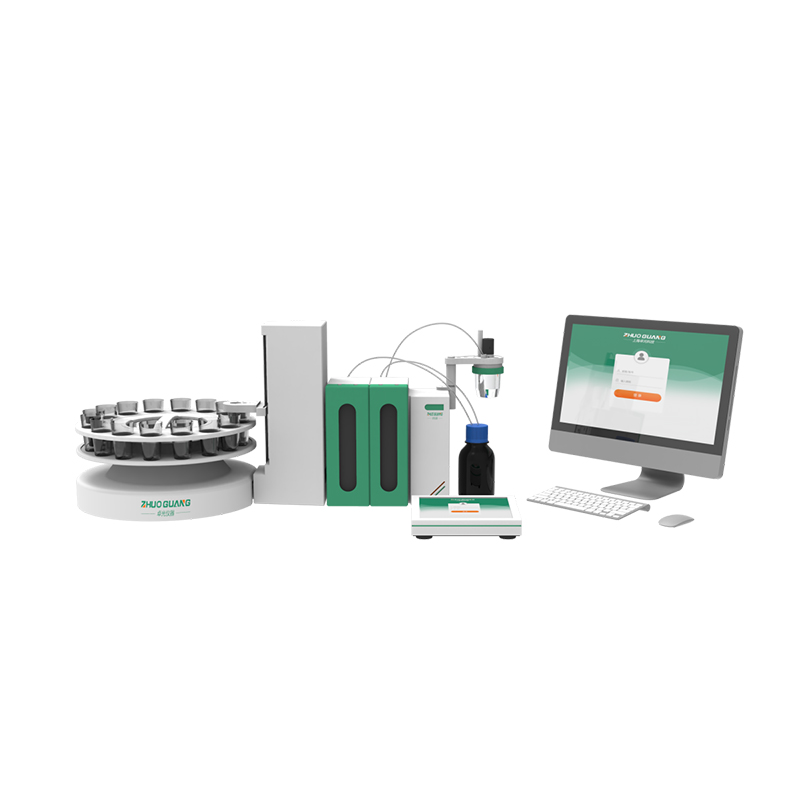
Do not evaluate throughput by titration time alone. Consider sample preparation, loading, dosing, endpoint detection, electrode rinsing, waste handling, and data review.
Ask the supplier to demonstrate the complete sequence using your sample type and method. This gives a more realistic estimate of daily capacity than relying on the number of sampler positions alone.
Electrode compatibility is essential to reliable titration. The appropriate sensor depends on the reaction being measured, the sample matrix, and the method's validated conditions.
Common options include:
pH glass electrodes for many acid-base titrations.
Redox electrodes for oxidation-reduction reactions.
Ion-selective electrodes for methods that measure specific ions, where supported by the instrument.
Specialized electrodes for certain non-aqueous or challenging sample matrices.
Dark or opaque samples can make visual color endpoints difficult to judge. Potentiometric endpoint detection may be suitable for many such applications because it evaluates electrical potential rather than relying on visible color change. However, the electrode and method must still be compatible with the sample chemistry.
Before purchasing, provide the supplier with your sample type, titration method, expected concentration range, solvent, and any known electrode-fouling or compatibility concerns.
Software requirements should be part of the selection process, particularly for laboratories that operate under formal quality systems.
Check whether the instrument and its software support the functions your workflow requires, such as:
Method setup and storage
Automatic result calculation
Titration curve display and result records
User access controls
Audit trails and electronic signatures, where required
Data export or connection to laboratory information systems
Do not assume that every model includes every feature. Confirm supported file formats, network interfaces, software options, and any required validation documentation with the supplier.
For regulated laboratories, verify the exact compliance requirements applicable to the site and analytical process. A product description alone should not replace a review of the software version, configuration, documentation, and qualification needs.
Routine maintenance supports consistent instrument performance. Follow the manufacturer's instructions for electrode storage, burette cleaning, reagent compatibility, tubing inspection, and replacement of wear parts.
When moving an established manual method to an automatic titrator, do not assume that results will match without verification. Endpoint detection principles, dosing profiles, stirring, and sample preparation may differ.
A practical verification plan should include:
Run the manual and automated methods on representative samples when appropriate.
Compare results against predefined acceptance criteria.
Optimize dosing, stirring, and endpoint settings according to the method.
Document repeatability and accuracy checks.
Train operators in routine use, cleaning, and troubleshooting.
The validation approach should follow the laboratory's quality system and applicable method requirements.
Choosing an automatic titrator involves balancing burette size, dosing performance, sample throughput, electrode compatibility, software requirements, and maintenance needs. No single specification determines whether an instrument is suitable for every laboratory.
Start with your analytical method and daily workload. Then compare the available configurations against the required performance and data requirements. A demonstration with representative samples can help confirm whether the selected system fits your workflow.
Explore Zhuoguang's automatic potential titrators and full product range, or contact the supplier to discuss your application and configuration requirements.
Estimate the titrant volume used in a typical analysis, then compare it with the available burette capacities and the method's performance requirements. Confirm the final selection through method testing.
Dosing resolution refers to the smallest volume increment the system can distinguish or deliver under specified conditions. Titration accuracy describes how closely the delivered volume matches the intended volume. They are different specifications.
An automatic sampler may be useful when sample volumes are high, many samples follow the same method, or operators need to reduce repeated manual loading. Choose the station count based on workload and the complete analysis cycle.
Electrode choice depends on the reaction, sample matrix, solvent, and validated method. Confirm compatibility with the instrument supplier before purchasing.
Check burette options, dosing specifications, supported titration methods, electrode compatibility, sampler configuration, data handling, software compliance needs, maintenance requirements, and supplier support.


