
- Home
- Products
- Hot Sales
- About Us
- Application
- Support
- News
- Contact
Views: 0 Author: Site Editor Publish Time: 2026-02-10 Origin: Site


Ever wondered how scientists measure light absorption in various substances? The answer often lies in the use of a spectrophotometer. These powerful instruments play a crucial role in fields like chemistry, medicine, and environmental science.
In this article, we will explore the different types of spectrophotometers and their applications. You'll learn how choosing the right spectrophotometer can enhance the accuracy and efficiency of your analysis.
The UV-Visible spectrophotometer (UV-Vis) measures light absorption across the ultraviolet (190-400 nm) and visible (400-700 nm) regions of the electromagnetic spectrum. It is commonly used to determine the concentration and chemical properties of substances by analyzing their interaction with light.
● Protein Quantification: Used in assays such as BCA and Bradford for determining protein concentration.
● DNA/RNA Analysis: Essential in molecular biology for quantifying nucleic acids, especially in genomics and biotechnology.
● Environmental Monitoring: Measures pollutants in water and air, aiding in environmental testing.
Pros | Cons |
Widely applicable in various scientific fields | Less specialized compared to IR or fluorescence spectrophotometers |
Relatively simple and cost-effective | Limited in detecting certain molecular interactions |
Suitable for routine quality control | May not provide the level of detail needed for complex molecular studies |
Infrared (IR) spectrophotometers measure light absorption in the infrared range (800-15,000 nm). These spectrophotometers are instrumental in identifying chemical bonds and studying molecular structures, particularly in organic and inorganic compounds.
● Chemical Bond Identification: Identifies functional groups and molecular structures in organic compounds.
● Molecular Structure Elucidation: Used for the identification of complex molecules and chemical compounds.
● Environmental Monitoring: Detects atmospheric gases and pollutants.
While UV-Vis spectrophotometers are focused on light absorption in the ultraviolet and visible regions, IR spectrophotometers specialize in measuring molecular vibrations, which are vital for studying larger molecules. IR spectrophotometers are better suited for in-depth chemical analysis and the study of organic compounds.
Fluorescence spectrophotometers measure the light emitted by a sample after it has been excited by light of a specific wavelength. This emitted fluorescence provides detailed information about the sample's molecular structure and concentration.
1. Excitation: A sample is exposed to light of a specific wavelength.
2. Emission: The sample emits light at a different wavelength, and this emitted light is measured.
3. Analysis: The intensity of the emitted light correlates with the concentration and structure of the molecules in the sample.
● Molecular Biology: Used to study DNA, RNA, proteins, and small molecules in biological systems.
● Environmental Testing: Sensitive detection of pollutants and contaminants in environmental samples.
● High Sensitivity: Able to detect low concentrations of molecules, making it highly useful in molecular biology and biochemistry.
Atomic Absorption Spectrophotometers (AAS) are designed to measure the absorption of light by vaporized atoms. AAS is a powerful tool for trace metal analysis, allowing precise quantification of metals in various samples.
● AAS works by using a light source to emit radiation at a specific wavelength, which is absorbed by the ground-state atoms in the sample. The amount of absorption is proportional to the concentration of the metal in the sample.
● Environmental Monitoring: Detects trace metals like lead, copper, and zinc in environmental samples such as soil, water, and air.
● Food Safety: Used to ensure the safety of food products by measuring the concentration of potentially harmful metals.
● Limited to Metal Analysis: AAS is specialized for detecting metals and cannot be used for non-metal elements.
● Cost and Complexity: AAS instruments are typically more expensive and require specialized training for use, limiting their application in less advanced labs.
Type | Wavelength Range | Main Application | Key Advantage | Limitations |
UV-Visible Spectrophotometer | 190-1100 nm | Protein quantification, DNA analysis, environmental monitoring | Versatility across applications | Less specialized than IR or fluorescence |
Infrared Spectrophotometer | 800-15,000 nm | Chemical bond identification, molecular structure studies | Specializes in molecular vibrations | Limited to larger molecules and functional groups |
Fluorescence Spectrophotometer | Variable (190-650 nm excitation) | Molecular biology, protein analysis, environmental testing | High sensitivity for low concentrations | Requires careful sample handling |
Atomic Absorption Spectrophotometer | Specific wavelengths for metals | Trace metal analysis | Highly sensitive for metal detection | Limited to metal analysis, high cost |
The UV-Vis-NIR spectrophotometer is a powerful analytical instrument that measures light absorption across a wide wavelength range: from ultraviolet (190 nm) to visible (700 nm) and near-infrared (700-3300 nm). Its versatility makes it a critical tool in a variety of scientific fields, providing essential data for analyzing different types of materials and environmental factors.
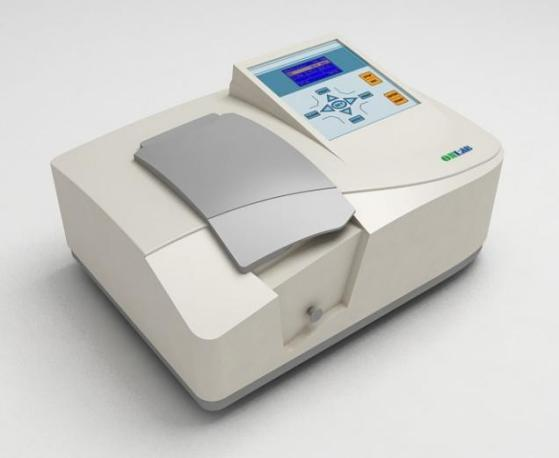
The broad wavelength range of the UV-Vis-NIR spectrophotometer enables the measurement of light absorption in three distinct regions:
● Ultraviolet (190-400 nm): Essential for molecular and biochemical analysis, including protein and nucleic acid studies.
● Visible (400-700 nm): Commonly used for colorimetric assays and material science.
● Near-Infrared (700-3300 nm): Provides insights into molecular vibrations and allows for detailed characterization of organic and inorganic materials.
This wide range of wavelengths allows researchers to capture a more comprehensive view of a sample's optical properties, compared to standard UV-Vis spectrophotometers that are limited to the ultraviolet and visible regions.
● Material Science: The ability to analyze materials across such a broad spectrum is invaluable in fields like material science, where understanding the optical properties of polymers, metals, and ceramics is essential for developing advanced materials.
● Environmental Research: UV-Vis-NIR spectrophotometers are increasingly used in environmental monitoring, particularly in assessing pollutants and studying atmospheric conditions by measuring light absorption across a wide range of particles and gases.
Feature | UV-Vis Spectrophotometer | UV-Vis-NIR Spectrophotometer |
Wavelength Range | 190-1100 nm | 190-3300 nm |
Main Applications | Protein quantification, DNA analysis | Material science, environmental research, molecular vibration analysis |
Versatility | Limited to UV and visible light | Includes NIR, offering more versatility in research |
Precision | Suitable for routine analysis | Ideal for detailed molecular and material analysis |
The UV-Vis-NIR spectrophotometer’s extended capabilities provide a higher level of detail and versatility, making it essential for comprehensive research applications.
Microplate spectrophotometers are designed for high-throughput testing, allowing labs to simultaneously analyze many samples, typically in 96-well or 384-well formats. These devices are essential for labs focused on large-scale biochemical assays and diagnostics, enabling rapid and efficient testing.
Microplate spectrophotometers analyze samples in microplates, which contain multiple wells. Each well holds a small volume of sample, and the spectrophotometer measures the light absorption or transmission from each well simultaneously. This enables the analysis of large sets of samples in a fraction of the time required for traditional spectrophotometry.
● Biochemical Assays: Used extensively for protein assays, DNA quantification, and enzyme-linked immunosorbent assays (ELISAs), making it ideal for molecular biology research.
● Medical Diagnostics: Plays a vital role in clinical diagnostics, enabling rapid testing of blood, serum, and other biological samples for various biomarkers.
● High-Throughput Screening: Widely used in pharmaceutical research to screen multiple compounds and analyze large sets of data efficiently.
● Increased Throughput: Capable of processing up to 384 samples at once, greatly improving the speed of experiments and research workflows.
● Efficiency: Reduces the amount of time spent preparing and testing individual samples, making it suitable for large-scale analysis.
● Cost-Effectiveness: Although initially expensive, the ability to handle a large volume of samples at once leads to long-term savings by increasing lab efficiency and throughput.
Feature | Microplate Spectrophotometer |
Sample Capacity | 96-well or 384-well plates |
Main Applications | Biochemical assays, medical diagnostics, high-throughput screening |
Advantages | Simultaneous analysis of multiple samples, efficient and fast |
Ideal for | Large-scale research, pharmaceutical research, clinical testing |
Microplate spectrophotometers are indispensable in labs that require rapid, high-volume testing, making them essential for the advancement of scientific research and diagnostics.
When selecting a spectrophotometer, it's essential to match the instrument type with the application and sample type to ensure accurate results. Spectrophotometers are designed to measure how different materials interact with light, and the sample type—whether liquid, solid, or gas—greatly influences the type of spectrophotometer needed.
● Liquid Samples: UV-Vis and microplate spectrophotometers are typically used for liquid samples, making them ideal for biochemical assays, DNA quantification, and medical diagnostics. These instruments are highly effective for analyzing samples in cuvettes or multi-well plates.
● Solid Samples: For solid samples, especially those with varying thicknesses or densities, reflectance and transmittance modes in spectrophotometers are crucial. UV-Vis-NIR spectrophotometers are particularly useful for studying materials in material science and environmental research.
● Small Sample Analysis: High-precision models like the Ultra Micro Spectrophotometer are designed for small sample volumes (as low as 0.5-2 µL), making them perfect for applications requiring small sample analysis, such as protein quantification and DNA/RNA studies in genomics and biotechnology.
Choosing the right spectrophotometer for your specific sample type ensures more reliable and accurate results, avoiding errors that could arise from mismatched instrumentation.
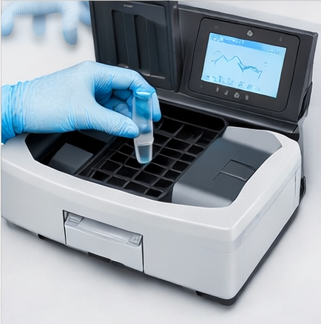
The wavelength range and resolution are two of the most crucial factors when choosing a spectrophotometer. These features dictate the types of analyses the instrument can perform and the level of detail it can provide.
● UV-Visible (UV-Vis) Spectrophotometer: Most commonly used, covering the range of 190-1100 nm, this type is ideal for general assays, including protein and DNA analysis.
● UV-Vis-NIR Spectrophotometer: For more detailed analysis, the extended range of 190-3300 nm allows for both ultraviolet, visible, and near-infrared measurements, making it suitable for material science, environmental research, and advanced chemical analysis.
● Infrared (IR) Spectrophotometer: This spectrophotometer covers a wider range (800-15,000 nm) and is specialized for studying molecular vibrations and chemical bonds in organic compounds.
● Higher Resolution: Instruments with higher resolution can detect finer differences in absorption spectra, which is crucial in detailed chemical analysis. For instance, microplate spectrophotometers offer higher resolution for large-scale biochemical assays, where slight variations in absorption can be significant.
● Accuracy: Spectrophotometers designed for precision, such as the UV-Vis-NIR spectrophotometer, provide accurate readings by minimizing measurement errors. This is particularly important in fields like pharmaceutical quality control and molecular biology, where precise concentration measurements are critical.
For laboratories that process large quantities of samples, throughput and speed are key factors in choosing the right spectrophotometer.
● High Throughput: Microplate spectrophotometers, which can analyze up to 384 samples at once, are designed for high-throughput applications. This is particularly valuable in environments such as clinical diagnostics or pharmaceutical research, where numerous samples must be analyzed simultaneously.
● Speed of Analysis: If time is a critical factor, such as in fast-paced industrial quality control or environmental monitoring, choosing a spectrophotometer with quick analysis capabilities can enhance laboratory productivity. Some UV-Vis-NIR models offer faster scanning times, enabling rapid sample analysis without sacrificing accuracy.
Factor | UV-Vis Spectrophotometer | UV-Vis-NIR Spectrophotometer | Microplate Spectrophotometer |
Wavelength Range | 190-1100 nm | 190-3300 nm | 190-1100 nm |
Sample Type | Liquids, solids | Liquids, solids, gases | Liquids |
Resolution | Standard | High | High |
Throughput | Low | Moderate | High (up to 384 samples) |
Speed of Analysis | Moderate | High | High |
When selecting a spectrophotometer, consider the throughput, wavelength range, resolution, and speed to ensure that the instrument matches the needs of your specific laboratory tasks. These factors will directly influence the efficiency and precision of your results.
This article covered various types of spectrophotometers, including UV-Vis, IR, fluorescence, and microplate models. Each type offers unique advantages for different applications, such as protein quantification, environmental monitoring, and material science. When selecting the right spectrophotometer, consider factors like wavelength range, accuracy, and throughput.
Shanghai Zhuoguang Instrument Technology Co., Ltd. offers versatile spectrophotometers that provide precise and reliable analysis across multiple fields. Their high-precision models cater to diverse laboratory needs, ensuring accuracy and efficiency in scientific testing.
A: A spectrophotometer measures light absorption or transmission to analyze the composition and concentration of substances. In industrial settings, it is used for quality control, material testing, and environmental monitoring.
A: When selecting a spectrophotometer, consider factors such as wavelength range, resolution, and throughput. The right choice depends on the specific needs of your application, whether for chemical analysis, material testing, or medical diagnostics.
A: Spectrophotometers provide high accuracy and reliability, making them ideal for consistent quality control in industries like pharmaceuticals, food production, and environmental testing.
A: The cost of a spectrophotometer can vary based on its features, such as wavelength range and resolution. Higher-end models with specialized capabilities typically come at a higher cost, but they offer better precision and versatility.
A: Yes, models like the Ultra Micro Spectrophotometer are designed for small sample analysis, while others, like UV-Vis models, handle larger sample volumes effectively. The choice depends on sample size and required precision.


