
- Home
- Products
- Hot Sales
- About Us
- Application
- Support
- News
- Contact
Views: 0 Author: Site Editor Publish Time: 2026-08-07 Origin: Site


Measuring lubricating oil density is not simply a matter of filling a cell and reading a number. Temperature, sample homogeneity, trapped air, contamination from a previous oil, and incomplete drying can all shift the result. The ZG-MD80 Fully Automatic Liquid Density Meter uses an oscillating U-tube, Peltier temperature control, and visual observation of the measuring cell to help manage these variables. A dependable test therefore requires a controlled sequence: prepare a representative sample, load it without bubbles, stabilize temperature, record the reading correctly, and clean the measuring path before the next sample.
Density represents mass per unit volume, but the volume of a liquid changes with temperature. For lubricating oils, even a technically correct density reading can be difficult to compare with another result if the test temperatures differ. The first control point is therefore the temperature at which density is measured or reported. If the laboratory specification requires a reference temperature such as 15°C or 20°C, the operator should use the appropriate controlled-temperature or validated conversion procedure rather than comparing values obtained under different conditions. The ZG-MD80 density meter provides Peltier temperature control within its specified 10°C to 45°C range, allowing the selected test temperature to be maintained under controlled instrument conditions.
Sample condition is equally important. A lubricating oil sample should represent the material being evaluated, so sediment, separated phases, or localized contamination should not be introduced accidentally during sampling. At the same time, vigorous shaking can entrain fine air bubbles, especially in more viscous oils, and those bubbles occupy volume inside the measuring tube without contributing the expected liquid mass. The resulting density may therefore shift from the true value of the loaded oil. If an oil is too viscous to transfer normally at the selected test temperature, it should be handled according to the applicable laboratory procedure rather than exposed to uncontrolled heating.
An oscillating U-tube density meter determines density from changes in the vibration behavior of a tube with a known internal volume. Once a liquid fills the measuring tube, its mass becomes part of the oscillating system, changing the vibration period or frequency. Calibration constants established with fluids of known density allow the instrument to convert that vibration response into a density value. This approach removes the need to read a floating hydrometer scale manually and allows temperature, sample loading, and digital calculation to be integrated into one measurement process.
For the ZG-MD80 Fully Automatic Liquid Density Meter, the specified density range is 0–3 g/cm³, with 0.00001 g/cm³ resolution, ±0.0002 g/cm³ repeatability, and ±0.0005 g/cm³ stated accuracy. Its Peltier liquid densimeter configuration can accept approximately 2 mL through manual injection or approximately 3 mL through the built-in automatic pump. The system also provides automatic cleaning, a drying air pump, and a video function for observing the measuring cell. For lubricating oil, the video view is particularly useful because a stable numerical result should not be accepted blindly if visible bubbles remain in the sample path.
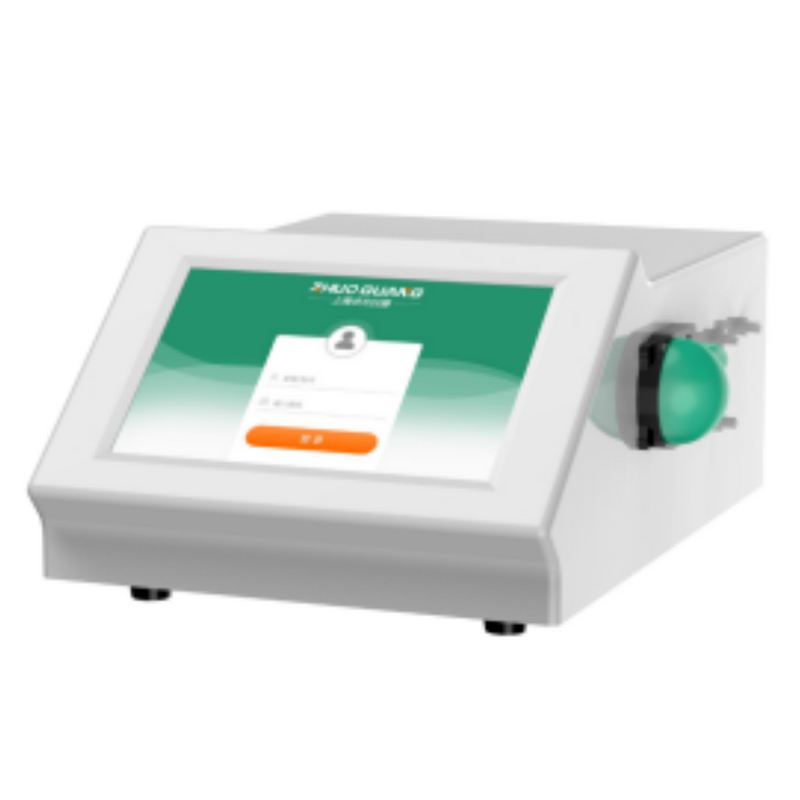
A repeatable lubricating oil test begins before the sample reaches the U-tube. Confirm the sample identity, decide the required test temperature, and make sure the measuring path is clean and dry. The ZG-MD80 Fully Automatic Liquid Density Meter can automate several actions, but automation does not replace sample inspection or correct method selection. The following workflow keeps the major measurement variables visible at each stage.
Step | Practical Action | Key Control Point |
|---|---|---|
1. Prepare the sample | Transfer a representative portion of lubricating oil into a clean sample container. Mix only as needed to restore uniformity without creating persistent foam or entrained air. | Avoid contamination, phase separation, and unnecessary aeration. |
2. Select the test condition | Set the required density method and test temperature before loading the oil. Use the same temperature basis when comparing batches or previous results. | Density comparisons are meaningful only when temperature conditions are consistent. |
3. Check the measuring path | Confirm that the U-tube and connected sample path are free from previous oil, cleaning liquid, and residual moisture. | Even a small amount of another liquid can change the composition of a small test portion. |
4. Introduce the oil | Use manual injection when required by the laboratory procedure or allow the built-in pump to draw the sample automatically. The ZG-MD80 uses about 2 mL for manual injection and about 3 mL for automatic sampling. | Fill the measuring section completely and avoid drawing air with the sample. |
5. Inspect for bubbles | Observe the measuring cell before accepting the test. If bubbles, gaps, or abnormal flow are visible, reload the sample rather than relying on the displayed density. | Air bubbles are a frequent source of shifted U-tube results. |
6. Allow stabilization | Let the sample reach the selected temperature and allow the ZG-MD80 density meter to complete its stability judgment before recording the value. | Do not compare a transient reading with an equilibrium density result. |
7. Record and repeat | Save the density together with sample identification and temperature. When the laboratory procedure requires parallel measurements, repeat the test and investigate results that differ more than the accepted repeatability criterion. | Repetition helps reveal bubbles, contamination, unstable temperature, or inconsistent sampling. |
The ZG-MD80 Fully Automatic Liquid Density Meter lists manual measurement times of approximately 1–4 minutes and automatic program times of approximately 2–10 minutes, depending partly on actual sample temperature. That range is a useful reminder that speed should not take priority over thermal stabilization. A lubricating oil entering the instrument far from the selected temperature may need additional time before the measurement settles. After the result is recorded, remove the oil, clean the sample path with a laboratory-approved cleaning procedure compatible with the sample and wetted components, and use the drying function until no cleaning liquid remains. Starting the next measurement with a truly clean and dry tube is part of the test rather than merely housekeeping.
Trapped air is one of the most recognizable errors, but it is not the only one. Incomplete displacement of a previous sample can create a mixed liquid inside the tube, while residual cleaning solvent can dilute the next lubricating oil. Incomplete drying may introduce another liquid phase, and testing before temperature equilibrium can produce a reading that continues to drift. The ZG-MD80 video function helps the operator visually check the measuring area, but clear observation should be combined with consistent filling and cleaning practices. A second U-tube configuration, such as a borosilicate U-tube densimeter, reflects the same fundamental need to control tube filling, residual liquid, temperature, and sample integrity during automatic density measurement.
Another mistake is treating density as if it were a complete assessment of lubricant condition. Density can support identification, formulation checks, batch comparison, material balance, and quality-control investigations, but different oils may have similar densities while differing substantially in viscosity, additive system, water content, oxidation state, or contamination. A density shift should therefore be interpreted against the product specification and other relevant test results rather than used alone to diagnose oil performance. Operators should also avoid reporting a bare number such as “0.87” without units and temperature. A useful record identifies the sample, density unit, measurement or reference temperature, method, replicate information where applicable, and any unusual sample condition observed during the test.
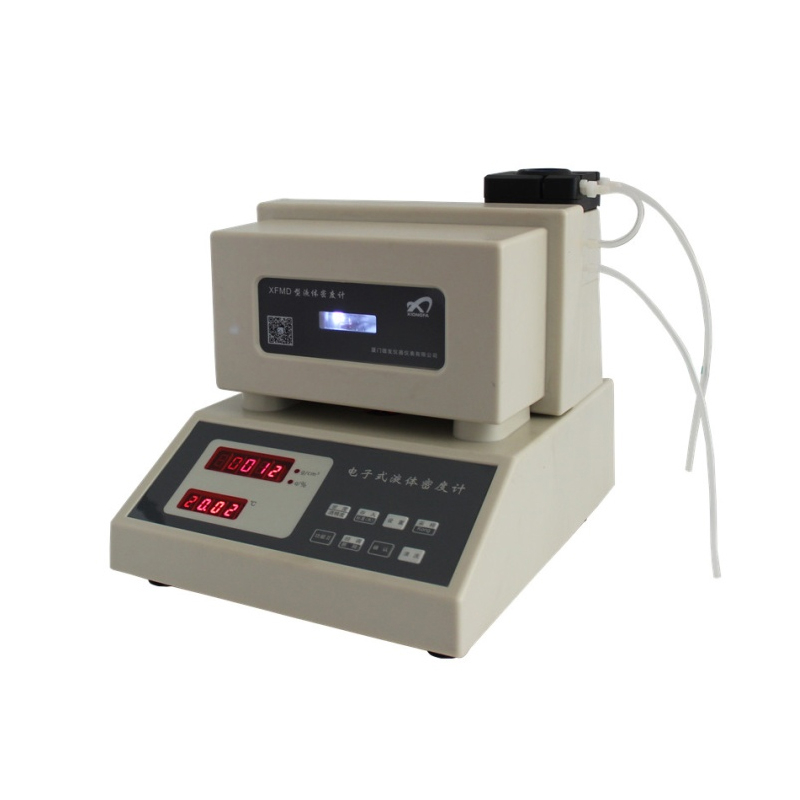
The density result from the ZG-MD80 Fully Automatic Liquid Density Meter should first be checked for plausibility and repeatability rather than accepted simply because the screen displays a stable value. Compare replicate measurements obtained under the same conditions, check the cell for bubbles if values differ unexpectedly, and confirm that the sample temperature and identification are correct. If the test program requires density at a standard reference temperature, use the validated procedure specified by the applicable laboratory method. Oscillating U-tube methods are commonly used for density measurement of petroleum products, including liquid and viscous oil samples that can be introduced into the measuring cell under controlled conditions.
No. | Sample Name | Sample ID | Date | Time | Temperature | Test Type | Measured Value | Test Type 2 | Measured Value 2 | Operator |
|---|---|---|---|---|---|---|---|---|---|---|
1 | Pure Water | 2 | 2025-06-23 | 14:22 | 20.0°C | Density | 0.9982 | Relative Density | 1.0000 | admin |
2 | Lubricating Oil | 3 | 2025-06-23 | 14:10 | 20.0°C | Density | 0.8572 | Relative Density | 0.8588 | admin |
3 | Lubricating Oil | 2 | 2025-06-23 | 14:05 | 20.0°C | Density | 0.8571 | Relative Density | 0.8587 | admin |
4 | Lubricating Oil | 1 | 2025-06-23 | 14:00 | 20.0°C | Density | 0.8573 | Relative Density | 0.8589 | admin |
5 | Pure Water | 1 | 2025-06-23 | 13:50 | 20.0°C | Density | 0.9982 | Relative Density | 1.0000 | admin |
Instrument selection should also match the laboratory workflow rather than a specification number alone. The ZG-MD80 density meter combines automatic sampling, Peltier control, video observation, cleaning, drying, and stored measurement methods in one system. Laboratories requiring a different operating configuration can also evaluate a touchscreen density meter with automatic injection, Peltier control, bubble monitoring, and data-management functions. In either case, accurate lubricating oil density testing still depends on representative sampling, controlled temperature, bubble-free filling, clean measuring surfaces, and disciplined reporting.
Reliable lubricating oil density measurement depends on controlling the entire test sequence, not only reading the final display. The ZG-MD80 Fully Automatic Liquid Density Meter combines U-tube measurement, Peltier temperature control, automatic sampling, visual cell inspection, cleaning, and drying to support a more controlled workflow. Shanghai Zhuoguang Instrument Technology Co., Ltd. is a scientific instrument manufacturer, and its ZG-MD80 density meter can support lubricant laboratories where consistent sampling, temperature management, bubble control, repeatability checks, and traceable result handling are part of routine density testing.
A: Yes. The ZG-MD80 density meter uses an oscillating U-tube method for liquid density measurement, while correct sampling, temperature control, and bubble inspection remain essential.
A: Liquid volume changes with temperature, so oil density also changes. Results should therefore be measured or converted to the temperature required by the applicable laboratory procedure.
A: The specified sample amount is approximately 2 mL for manual injection and approximately 3 mL when the built-in automatic sampling pump is used.
A: Do not accept the displayed result automatically. Remove or reload the sample, confirm complete filling, and repeat the measurement after the tube contains bubble-free oil.
A: Parallel measurements are useful when required by the laboratory method because inconsistent results can reveal sampling differences, trapped air, residue, or incomplete temperature stabilization.
```


