
- Home
- Products
- Hot Sales
- About Us
- Application
- Support
- News
- Contact
Views: 0 Author: Site Editor Publish Time: 2026-01-29 Origin: Site


Have you ever wondered how color is measured so precisely? In industries like textiles, food, and pharmaceuticals, getting the right color is crucial.
This is where spectrophotometers come in. These devices provide detailed, accurate color measurements that other methods can't match.
In this article, we’ll explain how spectrophotometers measure color and why they are preferred for color analysis.
A spectrophotometer is a scientific instrument designed to measure the intensity of light absorbed or transmitted by a sample across a range of wavelengths. This process helps to analyze the chemical composition, color, and concentration of substances. The device works by shining light on a sample and then detecting how much light is either absorbed, reflected, or transmitted. The data collected is used to generate a spectrum, which provides crucial information about the sample's properties.
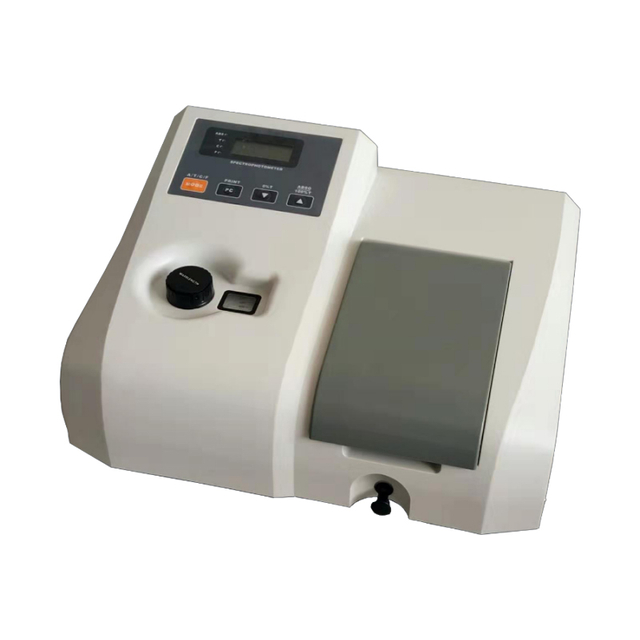
While both spectrophotometers and colorimeters measure color, their operational principles and level of precision differ.
● Colorimeter: Uses three broad filters (red, green, and blue) to mimic the human eye's perception of color. It provides a quick color reading, but it lacks the ability to measure the full spectrum of light.
● Spectrophotometer: Measures light across a broad range of wavelengths, producing a detailed "color fingerprint" of the sample. This makes spectrophotometers more accurate and versatile for tasks requiring precise color measurement, especially in fields like pharmaceuticals, textiles, and food production.
There are several types of spectrophotometers, each tailored to different applications:
Type of Spectrophotometer | Measurement Range | Primary Uses |
VIS Spectrophotometers | Visible spectrum (400-700 nm) | Routine quality control, color matching in food, textiles, and cosmetics. |
UV-VIS Spectrophotometers | UV (190-400 nm) + Visible spectrum | Molecular analysis, concentration measurement in biochemistry, and pharmaceuticals. |
Ultra Micro Spectrophotometers | UV and Visible spectrum (190-840 nm) | High-precision measurements on small samples, such as DNA/RNA quantification and nanoparticle analysis. |
A spectrophotometer measures color by quantifying how light interacts with a sample across the visible spectrum. This process involves several critical steps that ensure accurate color analysis:
1. Illumination: The measurement begins with a light source that shines light onto the sample. The light can be either broad-spectrum, such as tungsten-halogen or LED, depending on the spectrophotometer model. The quality and intensity of the light source play a significant role in ensuring that accurate color data is captured.
2. Dispersion: After the light hits the sample, it is passed through a monochromator or diffraction grating. These components separate the light into individual wavelengths for analysis. The monochromator works by selectively allowing different wavelengths of light to pass through to the sample, ensuring a precise analysis of the sample’s response at each wavelength.
3. Interaction: The light interacts with the sample in two possible ways, depending on the material being analyzed. For opaque materials, the light is reflected off the surface of the sample. For transparent materials, the light passes through the sample. This interaction is crucial because the way light is absorbed, reflected, or transmitted reveals essential color data.
4. Detection: A detector, such as a photodiode or CCD array, captures the light after it has interacted with the sample. The detector measures the intensity of light at various wavelengths. This data is then used to create a color profile of the sample, providing precise information about its color characteristics.
5. Data Translation: The detected light data is processed by the spectrophotometer and converted into numerical values. These values are typically expressed in standard color spaces such as CIE Lab, which describe the color in terms of lightness, red/green, and yellow/blue coordinates. This data allows for detailed comparison between different samples, providing a clear understanding of how the sample’s color is distributed across the visible spectrum.
The step-by-step process allows spectrophotometers to create a precise color profile or spectral reflectance curve that can be compared across different materials. This curve is essential for industries that require consistent and accurate color matching, such as in the manufacturing of paints, textiles, food, and cosmetics.
The light source in a spectrophotometer is a critical element for accurate color measurement. The light used typically spans a broad spectrum to cover a wide range of wavelengths, from ultraviolet (UV) to visible light. The spectrophotometer needs to analyze how the material interacts with different wavelengths, so the light must cover a broad range to ensure detailed measurements.
Once the light reaches the sample, it is passed through a monochromator, a device that disperses the light into its component wavelengths. This dispersion is essential for obtaining detailed color data since different materials absorb or reflect different wavelengths of light. Each wavelength interacts with the material differently, which is why analyzing the material’s response at many different wavelengths allows for a much more comprehensive understanding of its color properties.
The spectrophotometer then measures the intensity of the light at each wavelength, providing a detailed analysis of the sample’s color. This data can be used to assess a variety of color properties, such as hue, saturation, and brightness, which are essential for tasks like quality control, color matching, and formulation.
A significant factor in how spectrophotometers measure color is whether the material being analyzed is opaque or transparent. The method of measurement differs depending on the material’s ability to transmit light.
● Reflectance: For opaque materials like paint, fabric, or plastic, the spectrophotometer measures the light that bounces back from the surface. The device captures the reflected light at various wavelengths and uses this data to create a color profile of the sample. The spectrophotometer can then determine how much light is reflected at each wavelength, helping to build an accurate color representation. This is especially important in industries such as textiles, automotive coatings, and paints, where surface color must match precisely between different batches or products.
● Transmittance: For transparent materials like liquids, films, or glass, the spectrophotometer measures the amount of light that passes through the sample. This method is used to analyze the light transmission properties of the material. The spectrophotometer records how much light is transmitted at each wavelength, which helps determine the sample's color and optical characteristics. For instance, in the pharmaceutical industry, spectrophotometers are used to analyze the color and concentration of solutions or liquids, ensuring consistent quality in production.
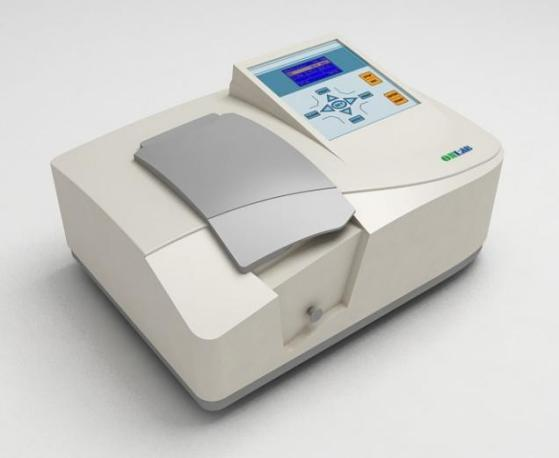
A spectral reflectance curve is a plot that shows how much light is reflected by a sample at each wavelength across the spectrum. It acts as a "color fingerprint," capturing the unique light interaction properties of the material. Spectrophotometers generate this curve by measuring light at multiple wavelengths, providing insights into the sample’s color and its composition.
● Reflection across wavelengths: The curve shows how reflective the material is at different points on the spectrum.
● Unique to each material: Different materials have different curves, making this method ideal for precise color identification.
Example of a Spectral Reflectance Curve
Wavelength (nm) | Reflectance (%) |
400 | 90 |
500 | 80 |
600 | 70 |
700 | 65 |
This table represents a simplified spectral reflectance curve for a material, showing the percentage of light reflected at various wavelengths.
Metamerism occurs when two samples appear to match in color under one light source but differ under another. Spectrophotometers are capable of detecting this phenomenon by comparing the spectral reflectance curves of different samples.
● How it works: The spectrophotometer measures the reflectance at multiple wavelengths, and by comparing the curves, it identifies metameric pairs.
● Practical use: Detecting metamerism ensures that products maintain consistent color appearance under various light sources.
Metamerism Detection Example
Sample A Reflectance | Sample B Reflectance |
85% at 450 nm | 84% at 450 nm |
60% at 550 nm | 62% at 550 nm |
40% at 650 nm | 38% at 650 nm |
Both samples may appear similar under one light source but show differences in their reflectance at different wavelengths. Spectrophotometers can pinpoint these differences, helping manufacturers ensure true color consistency.
Unlike basic color measurement tools like colorimeters, spectrophotometers measure light at multiple specific wavelengths, providing a much more accurate color profile. This results in:
● Highly detailed data: Spectrophotometers capture fine color variations that are crucial in industries like pharmaceuticals and food production.
● Accurate color identification: Spectrophotometers are more reliable than simpler tools that only approximate color based on broad filters.
The precision of spectrophotometers makes them essential across various sectors. Here are some key industries where spectrophotometers are vital:
Industry | Application |
Pharmaceuticals | Ensuring tablet and liquid color consistency |
Food and Beverages | Monitoring product color for consistency |
Textiles | Ensuring fabric color accuracy and uniformity |
Automotive Coatings | Matching vehicle paint colors across parts |
Spectrophotometers are valued for their reliability in providing consistent and repeatable results, especially when measuring colors under varying lighting conditions. Their ability to measure light at multiple wavelengths ensures that:
● Consistent color measurement: Even when light conditions change, spectrophotometers can provide consistent data, ensuring quality control.
● High reproducibility: Spectrophotometers are trusted for batch consistency and minimizing production defects in large-scale manufacturing processes.
By providing accurate, consistent, and reliable data, spectrophotometers help improve product quality and maintain color uniformity across industries.
Reflectance spectrophotometers are designed to measure light that is reflected off the surface of solid, opaque materials. These instruments are particularly useful for materials such as paint, textiles, and plastics, where light cannot pass through. The device illuminates the sample and measures the intensity of light reflected at different wavelengths, creating a detailed color profile. Reflectance spectrophotometers are essential for industries that require accurate color matching and quality control, ensuring consistency in products like coatings, fabrics, and packaging.
● Applications: Color matching for paints, textiles, and plastics; quality control in coatings and packaging.
● Key Feature: Measures color by analyzing the reflection of light off opaque surfaces.
Transmission spectrophotometers are used to measure light that passes through transparent materials, such as liquids, films, and clear plastics. These instruments are ideal for applications where light transmission is a key factor, providing detailed information about the transparency, absorption, and other optical properties of the sample. Transmission spectrophotometers are widely used in industries like pharmaceuticals to determine the concentration of substances in solution or to monitor transparency in materials.
● Applications: Pharmaceutical analysis, liquid color measurement, transparency analysis for glass and plastic films.
● Key Feature: Measures the amount of light that passes through transparent materials.
UV spectrophotometers are capable of measuring light in both the ultraviolet (UV) and visible spectra, typically ranging from 190 nm to 800 nm. These instruments are particularly useful for analyzing materials that react to UV light or require a broad range of spectral data. By combining both UV and visible light measurement, UV spectrophotometers are used in advanced applications such as chemical analysis, molecular biology, and environmental monitoring. These instruments help researchers study chemical interactions, protein analysis, and the concentration of various substances.
● Applications: Chemical and biochemical analysis, molecular biology, environmental studies, and UV-sensitive material testing.
● Key Feature: Provides measurements across both UV and visible ranges, allowing for comprehensive spectral analysis.
Spectrophotometers provide precise measurements of color by analyzing how light interacts with materials. Their ability to measure light at multiple wavelengths ensures accurate and consistent results across industries. Shanghai Zhuoguang Instrument Technology Co., Ltd. offers high-quality spectrophotometers that help ensure color consistency and meet industry standards. Their products deliver exceptional value, making them ideal for industries such as pharmaceuticals, textiles, and food production.
A: A spectrophotometer is used to measure the color of materials by analyzing the light they reflect or transmit. It is essential for ensuring color consistency in industries such as textiles, food, and pharmaceuticals.
A: A spectrophotometer measures light at multiple wavelengths, providing precise color profiles and reducing the risk of errors caused by subjective visual assessments.
A: When choosing a spectrophotometer, consider factors like measurement range, sample size compatibility, ease of use, and whether it supports specific materials like opaque or transparent samples.
A: While spectrophotometers can be an upfront investment, their accuracy and ability to ensure consistent color in high-volume production can reduce costly errors and rework, making them a cost-effective solution in the long run.
A: Regular calibration, cleaning of optical components, and periodic software updates are essential to maintain the performance and accuracy of a spectrophotometer in industrial settings.


