
- Home
- Products
- Hot Sales
- About Us
- Application
- Support
- News
- Contact
Views: 0 Author: Site Editor Publish Time: 2026-01-27 Origin: Site


Have you ever wondered how scientists measure the concentration of substances in a solution? The answer often lies in a spectrophotometer. This powerful instrument is used across many industries, from pharmaceuticals to environmental monitoring.
In this article, we will explore what a spectrophotometer is and how it works. You will also learn about its various applications in different fields and why it is essential for precise measurements.
A spectrophotometer is a scientific instrument used to measure the intensity of light absorbed or transmitted by a sample. This process is essential for analyzing the chemical composition, concentration, and molecular structure of substances by examining their interaction with light at various wavelengths.
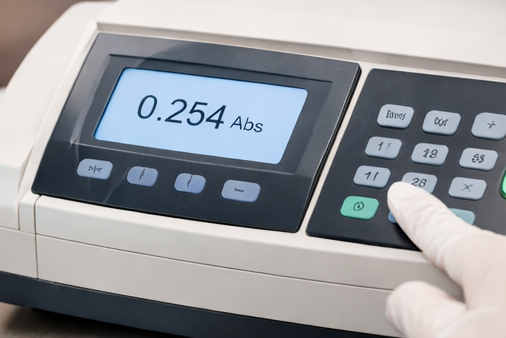
The spectrophotometer's core function is to measure how much light a sample absorbs or transmits at specific wavelengths. This is achieved by:
1. Light Source: Directing a beam of light through the sample.
2. Interaction: The sample absorbs certain wavelengths of light depending on its chemical composition.
3. Measurement: The amount of light that passes through the sample is measured by the detector.
4. Absorbance Calculation: The difference between incident and transmitted light is used to calculate absorbance, which directly correlates to the concentration of the substance in the sample.
This interaction can be quantified using the Beer-Lambert Law, which relates absorbance to concentration. The spectrophotometer applies this principle to provide accurate measurements of the sample's chemical or biological content.
A spectrophotometer consists of several core components that work together to perform the measurement:
● Light Source: Provides a stable beam of light to illuminate the sample. The type of light source depends on the required wavelength range, including tungsten lamps (for visible light), deuterium lamps (for ultraviolet light), and xenon lamps (for high-end spectrophotometers).
● Monochromator: Isolates specific wavelengths from the broad spectrum of light emitted by the source, typically using a diffraction grating or prism.
● Sample Holder (Cuvette): The sample is placed in a cuvette through which the light passes. The material of the cuvette is chosen based on the wavelength range of the light being measured (e.g., quartz or glass).
● Detector: Measures the intensity of the light that passes through the sample. The detector converts this intensity into an electrical signal, which is used to calculate absorbance or transmittance.
The spectrophotometer operates on the principle of light-matter interaction, where light interacts with the molecules in the sample. The key aspects of this interaction are:
● Selective Absorption: Each substance absorbs light at specific wavelengths based on its molecular structure. The spectrophotometer measures this absorption, creating a unique "spectral fingerprint" for the substance.
● Transmission and Absorption: The sample absorbs some light and transmits the rest. The spectrophotometer measures both the transmitted and absorbed light to determine the absorbance, which is then linked to the sample’s concentration.
By analyzing how light interacts with the sample, the spectrophotometer provides crucial data for understanding the sample's chemical composition and concentration. This makes the spectrophotometer a vital tool in various scientific and industrial applications.
Spectrophotometers are versatile instruments used across various industries to measure light absorption and transmittance. By quantifying how light interacts with substances, they provide valuable insights into the concentration, composition, and quality of materials. Below are the main applications of spectrophotometers in different fields.
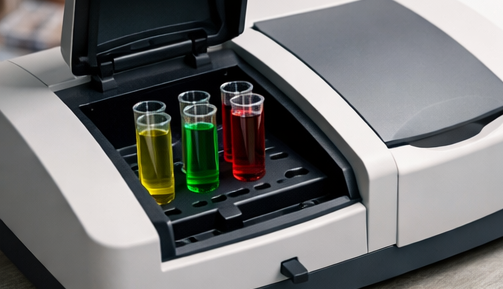
Spectrophotometers are widely used in laboratories for quantitative analysis, particularly in determining the concentration of substances in a solution. The process relies on the principle that light absorption is directly related to the concentration of a substance in the sample. By measuring the amount of light absorbed by a solution at a specific wavelength, the spectrophotometer calculates the concentration of the analyte. This type of analysis is essential in several fields, as summarized below:
Field | Application |
Chemical Analysis | Determining the concentration of reactants or products in a reaction. |
Pharmaceuticals | Ensuring accurate concentrations of active ingredients in drug formulations. |
Environmental Monitoring | Measuring pollutant levels such as heavy metals in air, water, or soil. |
In addition to quantitative analysis, spectrophotometers also assist in qualitative analysis by identifying substances based on their unique spectral characteristics. Each chemical compound absorbs light at specific wavelengths, creating a "spectral fingerprint." This allows spectrophotometers to:
● Identify unknown substances by comparing the absorption spectrum of a sample with known standards.
● Determine molecular structure by identifying functional groups in organic compounds through their characteristic absorption bands.
● Verify purity by identifying contaminants or confirming the presence of specific compounds.
Here are some of the key applications of spectrophotometers in qualitative analysis:
Application | Description |
Substance Identification | Comparing absorption spectra with known substances for identification. |
Molecular Structure Determination | Identifying functional groups in organic compounds. |
Purity Verification | Ensuring sample purity, particularly in pharmaceuticals. |
Color measurement is another significant application of spectrophotometers, especially in industries where consistency and accuracy are crucial. Spectrophotometers measure the absorption of light at various wavelengths to quantify color, which is essential for maintaining product quality. In the following industries, spectrophotometers are used to ensure color consistency:
Industry | Application |
Paint and Coatings | Ensuring uniform color in large batches of paint. |
Textiles and Fabrics | Verifying that fabric colors match the desired standards during production. |
Food and Beverages | Measuring color consistency in juices, wines, and soft drinks. |
Spectrophotometers are indispensable tools in a wide range of industries, helping to measure light absorption and transmission to provide valuable insights into the chemical, biological, and physical properties of substances. Below are some of the key applications of spectrophotometry in various fields.
In biochemistry and life sciences, spectrophotometry plays a critical role in analyzing and quantifying substances at the molecular level. Spectrophotometers are especially useful for small sample analysis, making them ideal for high-precision tasks such as:
● DNA and RNA quantification: Spectrophotometers measure the absorbance of light at specific wavelengths, such as 260 nm, to quantify nucleic acids. This is crucial in molecular biology and genetics research, where precise DNA and RNA concentrations are needed for experiments such as polymerase chain reaction (PCR) and sequencing.
● Protein analysis: By measuring absorbance at wavelengths like 280 nm, spectrophotometers help quantify proteins and assess their purity. This is essential for protein-related research, such as enzyme activity studies, antibody production, and biomarker detection.
These applications allow researchers to conduct experiments with high sensitivity, even using minute sample volumes, which is especially important in high-throughput screening and molecular diagnostics.
Spectrophotometry is widely used in the pharmaceutical industry for both research and quality control purposes. Spectrophotometers help ensure the safety, efficacy, and consistency of pharmaceutical products by performing:
● Drug analysis and quality control: Spectrophotometers are used to measure the concentration and purity of pharmaceutical compounds. This ensures that active ingredients are present in the correct amounts and that no contaminants are present. The method is often applied to ensure compliance with pharmacopoeia standards for drug formulations.
● Formulation consistency: Ensuring that pharmaceutical products maintain consistent quality over time is vital. Spectrophotometers are used to monitor the stability of formulations, ensuring that color, concentration, and chemical composition remain constant throughout production runs.
By ensuring accurate formulations and the quality of raw materials, spectrophotometry helps pharmaceutical companies meet regulatory requirements and produce reliable products.
In environmental science, spectrophotometry is employed to assess the presence and concentration of various pollutants, providing valuable data for environmental protection efforts. Key applications include:
● Water and air quality testing: Spectrophotometers measure pollutants like heavy metals (e.g., lead, mercury), nitrates, and phosphates in water samples. This is crucial for environmental monitoring, particularly in ensuring clean drinking water and assessing the health of ecosystems.
● Pollution monitoring: The ability to detect pollutants in the air is essential for environmental impact assessments. Spectrophotometers help measure airborne contaminants and their concentrations, providing valuable data to assess the impact of industrial activities on air quality.
Spectrophotometry, a vital tool in various scientific fields, relies heavily on the Beer-Lambert Law to relate absorbance to concentration. This law is essential for quantifying substances in solutions, making it a foundational principle in spectrophotometric analysis.
The Beer-Lambert Law provides the mathematical framework for determining the concentration of a substance based on its absorbance at a specific wavelength. According to this law:
Absorbance (A) is directly proportional to:
● Concentration (c) of the substance in the sample,
● Path length (l) of the sample,
● Molar absorptivity (ε), which is a constant that depends on the substance and wavelength of light.
The relationship is expressed as:
A=ε⋅c⋅l
Term | Description |
A | Absorbance of the sample |
ε | Molar absorptivity (depends on the substance and wavelength) |
c | Concentration of the substance in the sample |
l | Path length of the sample (distance the light travels through) |
This equation allows spectrophotometers to calculate the concentration of a substance in a sample by measuring how much light is absorbed at a given wavelength.
In practical terms, the Beer-Lambert Law is used to quantify substances in solutions by measuring light absorption. The process typically involves several steps:
1. Selection of Wavelength: The specific wavelength is chosen based on the substance's absorption characteristics.
2. Measurement of Absorbance: The spectrophotometer measures the absorbance of the sample at the selected wavelength.
3. Calculation of Concentration: Using the Beer-Lambert Law, the absorbance value is converted into the concentration of the substance.
This process is widely used in industries such as pharmaceuticals, where precise concentrations of active ingredients are crucial, and environmental science, where pollutant levels need to be accurately measured.
Achieving reliable spectrophotometric results requires careful attention to sample preparation, calibration, and instrument maintenance. Following these best practices ensures that the spectrophotometer delivers precise, reproducible data.
Proper sample preparation is essential for obtaining accurate spectrophotometric readings. Factors to consider include:
● Clean and Clear Cuvettes: Ensure cuvettes are free of dust or fingerprints, which could interfere with light transmission.
● Homogeneous Samples: For solutions with multiple components, mix thoroughly to avoid uneven concentration distribution.
● Consistent Path Length: Use cuvettes with a consistent path length to ensure uniform results across measurements.
Calibration is critical to maintaining the accuracy of spectrophotometric measurements. This process typically involves:
1. Zeroing the Instrument: Before taking measurements, the instrument should be zeroed using a blank sample. This ensures that no background interference (e.g., solvent absorbance) affects the readings.
2. Routine Calibration: Periodically check the instrument against known standards or reference materials to confirm that the spectrophotometer is functioning correctly.
Proper calibration ensures that the spectrophotometer remains accurate over time, preventing errors in measurement.
Regular maintenance is key to ensuring that the spectrophotometer performs optimally throughout its lifespan. Important maintenance practices include:
● Cleaning: Regularly clean the sample holder, cuvettes, and optical components to prevent contamination.
● Lamp Replacement: Replace the light source periodically, as it can degrade over time and affect measurement accuracy.
● Routine Checks: Perform regular system checks and software updates to ensure the spectrophotometer is aligned and functioning as intended.
By following these best practices, users can maximize the performance and longevity of their spectrophotometer, ensuring that it provides reliable and accurate measurements for years to come.
Spectrophotometers play a vital role in science, industry, and quality control. They enable accurate measurements for analyzing substances in various fields, from biochemistry to environmental monitoring. As technology advances, spectrophotometers continue to evolve, offering more precise results. Shanghai Zhuoguang Instrument Technology Co., Ltd. offers high-quality spectrophotometers, such as their Ultra Micro Spectrophotometer, which provides exceptional accuracy for small sample analysis and enhances laboratory efficiency.
A: A spectrophotometer is used to measure light absorbance or transmittance in industrial applications, enabling precise analysis of chemical compositions, concentrations, and material properties.
A: A spectrophotometer ensures accurate, consistent measurements in quality control by detecting variations in material properties such as color and concentration, helping maintain product standards.
A: Consider the spectrophotometer’s wavelength range, precision, sample size compatibility, and the type of materials to be analyzed to ensure it meets specific operational needs.
A: Regular calibration, cleaning of optical components, and timely lamp replacement are essential to maintain accuracy and extend the instrument’s lifespan in industrial environments.


