
- Home
- Products
- Hot Sales
- About Us
- Application
- Support
- News
- Contact
Views: 0 Author: Site Editor Publish Time: 2026-02-03 Origin: Site


Color measurement is crucial in industries like manufacturing, research, and quality control. But how do we measure color accurately? Two common tools are the spectrophotometer and the colorimeter. In this article, we'll explore the key differences between these instruments. You’ll learn how to choose the right tool based on your needs and application.
A colorimeter is an instrument used to measure color by simulating the way the human eye perceives light. It quantifies the intensity of light reflected or transmitted by a sample, producing a numerical value that represents its color. The device uses filters to isolate specific wavelengths of light, which are then analyzed to determine the sample's color properties, providing an objective measurement.
Colorimeters measure color by passing light through a sample and analyzing how much light is absorbed or transmitted at specific wavelengths. Here’s how the process unfolds:
1. Light Source: A controlled light source is directed at the sample to ensure consistency across measurements.
2. RGB Filters: The light that passes through the sample is filtered using red, green, and blue filters, mimicking the human eye's response to light.
3. Tristimulus Values: These filtered wavelengths are analyzed to generate tristimulus values, which represent the sample’s color. The color data is then presented in standardized formats such as Lab*, ΔE, or other recognized color scales.
4. Data Output: The values are processed and displayed, providing a clear, objective measurement of the color.
The simplicity of this method ensures that color measurements are reliable and consistent, making colorimeters valuable tools in many industries.
Colorimeters offer a variety of benefits, making them especially useful in industrial and research environments where quick and accurate measurements are needed. Key advantages include:
Advantage | Explanation |
Portability | Compact and lightweight, making colorimeters easy to transport and use on-site. |
Ease of Use | User-friendly design and interfaces, ideal for users with minimal technical knowledge. |
Cost-Effective | More affordable than other color measurement instruments like spectrophotometers. |
Speed | Provides quick results, suitable for fast-paced environments like manufacturing. |
Consistency | Reduces human error by standardizing the measurement process. |
Although colorimeters are valuable tools, they come with certain limitations that need to be taken into account when selecting the right instrument for a particular task. The main limitations include:
Limitation | Explanation |
Limited Spectral Range | Colorimeters measure only a portion of the visible light spectrum (typically 400–700 nm). |
No Full Spectrum Data | Cannot provide full spectral analysis, unlike spectrophotometers, which measure a wider range of wavelengths. |
Inability to Detect Metamerism | Colorimeters cannot identify metamerism, where two colors look identical under one light but differ under another. |
Limited Adjustability | Colorimeters lack the flexibility to adjust for different light sources or measurement angles. |
A spectrophotometer is a scientific instrument used to measure the intensity of light absorbed or transmitted by a sample across a wide range of wavelengths. Unlike simpler devices such as colorimeters, spectrophotometers offer a more detailed analysis by examining how light interacts with the sample. This provides a comprehensive understanding of the sample’s composition, concentration, and molecular structure. Spectrophotometers are essential for a variety of precise scientific and industrial applications.
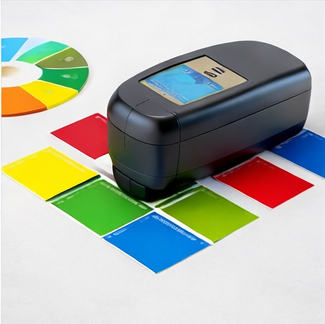
Spectrophotometers work by passing light through or reflecting light off a sample and measuring how much light is absorbed at specific wavelengths. Here's a step-by-step breakdown of the process:
1. Light Source: A light beam (often from a deuterium lamp for UV or tungsten lamp for visible light) is directed at the sample.
2. Monochromator: A diffraction grating or prism is used to split the light into its individual wavelengths.
3. Sample Interaction: As light passes through or reflects off the sample, certain wavelengths are absorbed, and others are transmitted or reflected.
4. Detector: The detector measures the intensity of light that is transmitted or reflected at each wavelength, creating a spectral curve.
5. Data Output: The software processes the data, providing absorbance or transmittance values at each wavelength, which are used to analyze the sample's properties.
This process enables the spectrophotometer to produce detailed spectral data that can be used for chemical analysis, color matching, and molecular research.
Spectrophotometers offer several key advantages that make them invaluable tools in scientific research and industrial applications. Key advantages include:
Advantage | Explanation |
High Precision | Spectrophotometers provide accurate and reliable measurements with minimal error. |
Versatility | Capable of analyzing a wide range of sample types, including solids, liquids, powders, and transparent materials. |
Detection of Metamerism | Can detect metamerism, where two colors appear identical under one light but differ under another. |
Comprehensive Data | Provides full spectral data, which is useful for in-depth chemical and molecular analysis. |
Flexibility | Adjustable settings for light sources and measurement geometry, allowing for a broad range of applications. |
Despite their advantages, spectrophotometers have a few limitations that should be considered when selecting the right tool for a task. These limitations include:
Limitation | Explanation |
Complexity | Requires technical expertise to operate and interpret results, which can make them more difficult to use than simpler instruments. |
High Cost | Spectrophotometers are generally more expensive than other color measurement devices, which may limit accessibility. |
Size and Portability | Many spectrophotometers are benchtop instruments, making them less convenient for field use. |
Calibration Needs | Requires regular calibration to ensure accurate and reliable results, adding to maintenance time and costs. |
One of the most significant differences between colorimeters and spectrophotometers is the range of wavelengths they measure. Colorimeters are typically limited to the visible light spectrum, generally spanning from 400 nm to 700 nm. This range is suitable for most routine color measurements, such as color matching or quality control. In contrast, spectrophotometers cover a much broader spectrum, from ultraviolet (UV) to visible light and even infrared (IR), ranging from approximately 190 nm to 2500 nm. This extended wavelength range allows spectrophotometers to provide a more detailed analysis of a sample's light absorption or transmission across different wavelengths, making them ideal for more complex and scientific applications.
When it comes to accuracy and precision, spectrophotometers excel in providing high-level detail and reliability. Due to their ability to measure light across a broad spectrum, spectrophotometers deliver more precise and comprehensive data. They are essential for tasks that require high accuracy, such as molecular analysis, environmental testing, and research. Colorimeters, on the other hand, are designed for basic color comparison and are typically used for "pass/fail" checks. Their accuracy is sufficient for many industrial applications, but they are not as precise as spectrophotometers in detecting subtle color differences or in-depth analysis.
The data output from these two instruments also differs considerably. Colorimeters produce tristimulus values, which represent the color by combining values for red, green, and blue (RGB) components. These values are sufficient for applications like quality control and color consistency checks. However, colorimeters do not provide full spectral data, limiting their ability to analyze complex color variations. Spectrophotometers, by contrast, generate full spectral curves, which show how light is absorbed or transmitted across the entire spectrum of wavelengths. This data provides a much more detailed view of the sample's color properties and allows for more advanced analysis, such as detecting metamerism (color differences under various light conditions).
Another major difference between the two instruments lies in their cost and complexity. Colorimeters are generally more affordable and easier to use. They are compact, portable, and ideal for quick, routine measurements, making them well-suited for industries that need fast color checks without requiring advanced analysis. Spectrophotometers, however, are more complex and costly due to their high precision, broad spectrum capabilities, and advanced data analysis features. These instruments are typically used in research labs or industries that demand detailed and highly accurate measurements, such as pharmaceuticals or environmental monitoring.
Aspect | Colorimeter | Spectrophotometer |
Wavelength Range | 400 nm - 700 nm (visible light) | 190 nm - 2500 nm (UV, visible, IR) |
Accuracy | Moderate, suitable for basic checks | High, suitable for precise analysis and research |
Data Output | Tristimulus values (RGB) | Full spectral curves (absorption/transmittance data) |
Cost & Complexity | Affordable, easy to use, portable | Expensive, complex, requires technical expertise |
Applications | Quality control, routine color matching | Research, advanced color analysis, environmental testing |
Spectrophotometers come in different models designed for specific applications. For instance:
● VIS Spectrophotometer: Measures light in the visible spectrum and is commonly used for routine color analysis, such as in food, cosmetics, and environmental monitoring.
● Ultra Micro Spectrophotometer: Designed for high-precision measurements of very small sample volumes (0.5–2 µL), commonly used in biopharma for DNA, RNA, and protein quantification.
Colorimeters are essential in industries like textiles, food, and beverages, where maintaining color consistency is crucial. These instruments are used for efficient, quick color checks to ensure products meet required standards.
● Textiles: Ensures uniformity in fabric colors after dyeing.
● Food & Beverage: Verifies color consistency in drinks, sauces, and packaged goods.
● Packaging: Checks printed materials, such as labels and boxes, for brand color consistency.
Colorimeters are also valuable in non-industrial settings, assisting in various applications that require reliable color measurement.
● Cosmetics: Ensures makeup products maintain consistent shades across batches.
● Water Testing: Measures chemical concentrations in water by detecting color changes.
● Clinical Diagnostics: Analyzes biological samples to determine substance concentrations based on color changes.
In manufacturing, colorimeters are focused on speed and standardization, while in everyday applications, the emphasis is on sensitivity and detecting subtle color changes.
Spectrophotometers are vital in biotech, pharmaceuticals, and color formulation. They help researchers analyze substances by measuring light absorption at various wavelengths.
● Biotechnology & Pharmaceuticals: Used for quantifying biomolecules, aiding in drug formulation.
● Color Formulation: Ensures color accuracy by analyzing the full spectrum of light.
Spectrophotometers are crucial for assessing air, water, and soil quality by detecting pollutants based on light absorption.
● Water Quality Testing: Detects harmful substances like heavy metals.
● Air Quality Monitoring: Measures pollutants like ozone and particulate matter.
● Soil Testing: Analyzes soil for nutrients and contaminants.
Spectrophotometers are also used in specialized fields such as art restoration, pigment analysis, and electronics quality assurance.
● Art Restoration: Identifies pigments and materials for accurate restoration.
● Pigment Analysis: Ensures color consistency in paints and textiles.
● Electronics QA: Measures color consistency in screens and displays.
Model | Range | Key Application |
UV-VIS Spectrophotometer | UV and visible light | Chemical analysis, molecular research, environmental testing |
Ultra Micro Spectrophotometer | High precision, small sample sizes | DNA, RNA, and protein quantification in genomics |
When deciding whether to use a colorimeter or a spectrophotometer, the primary factor to consider is the type of analysis required for your specific application. Colorimeters are ideal for simple color matching and routine quality control tasks. They are well-suited for applications where only the color of the sample is important, such as in manufacturing, where quick checks of color consistency are needed.
On the other hand, spectrophotometers are required for detailed spectral analysis. If your application involves complex color formulations, chemical analysis, or research that demands high precision and a comprehensive understanding of the light interaction with the sample, a spectrophotometer is the better choice. For example, spectrophotometers are commonly used in research labs, pharmaceuticals, and environmental monitoring, where precise measurements of light absorption across a broad range of wavelengths are essential.
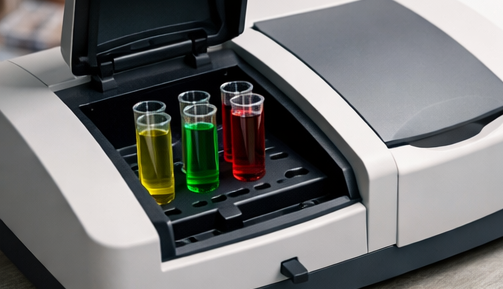
When choosing between a colorimeter and a spectrophotometer, budget plays a critical role. Colorimeters are typically more affordable and easier to operate, making them ideal for industries or businesses that require consistent but not highly detailed color measurements. For instance, small manufacturers or quality control labs often use colorimeters to conduct quick, routine checks without the need for intricate data.
Spectrophotometers, however, come with a higher price tag due to their advanced capabilities and versatility. The high cost of spectrophotometers is often justified by their ability to provide detailed, full-spectrum data, which is crucial for industries that need to meet strict regulatory standards or conduct advanced research. Businesses or labs that require such precision, such as in pharmaceutical or environmental testing, may be willing to invest in a spectrophotometer despite the higher cost.
Instrument | Price Range | Best For |
Colorimeter | Low to Moderate | Basic color checks, quality control |
Spectrophotometer | Moderate to High | Detailed analysis, research, R&D |
Another key consideration when choosing between these two instruments is portability and versatility.
● Colorimeters are compact and lightweight, making them easy to transport and use in field settings. They are perfect for quick measurements in production environments, such as checking the color of products during manufacturing or for testing in locations where portability is crucial.
● Spectrophotometers, while also available in portable models, are typically larger and more complex. They are better suited for laboratory environments, where precise measurements of light across various wavelengths are needed. While some spectrophotometers are designed for portability, they still require more careful handling and setup compared to colorimeters.
Instrument | Portability | Versatility |
Colorimeter | High (easy to transport) | Limited to visible light spectrum |
Spectrophotometer | Moderate (less portable) | Broad range (UV to IR, more versatile) |
This article highlights the key differences between colorimeters and spectrophotometers. Colorimeters are ideal for simple color matching and cost-effective solutions, while spectrophotometers offer detailed spectral analysis and higher precision for complex tasks. Understanding these differences will help you choose the right tool based on your needs, whether it’s for routine checks or advanced research. Shanghai Zhuoguang Instrument Technology Co., Ltd. offers a range of spectrophotometers, providing high-quality solutions for precise color measurement, ensuring accuracy in various industries.
A: A spectrophotometer is used in industrial applications to measure the precise color and composition of materials, providing detailed data for quality control, research, and product development.
A: A spectrophotometer is preferred when high-precision measurements, full spectral analysis, and the detection of subtle color variations are required, especially in complex manufacturing processes.
A: Spectrophotometers are more expensive due to their advanced capabilities, including full-spectrum analysis, making them suitable for high-precision tasks. In contrast, colorimeters are more affordable for basic color matching.
A: Regular calibration and occasional cleaning are essential to maintain the accuracy and reliability of a spectrophotometer in production environments.


