
- Home
- Products
- Hot Sales
- About Us
- Application
- Support
- News
- Contact
Views: 0 Author: Site Editor Publish Time: 2026-02-05 Origin: Site


Spectrophotometers are vital in scientific research and analysis. But how do you choose the right one for your needs? Single beam or double beam—each has its advantages.
In this article, we will compare these two types of spectrophotometers, exploring their differences, benefits, and ideal applications. You will learn which one suits your specific requirements in research or industry.
A spectrophotometer is an instrument used to measure the intensity of light absorbed or transmitted by a sample. It works by directing light through a sample and analyzing how much light is absorbed or transmitted. This data provides insights into the sample's properties, such as concentration, chemical composition, and molecular structure. Spectrophotometers play a critical role in many fields, including chemistry, biology, and environmental science, where accurate measurements of light interaction are essential for understanding material properties.
The principle behind the instrument involves passing light through a sample and detecting the amount of light that emerges. The measurement can be used to infer various characteristics of the sample, such as its chemical concentration or purity.
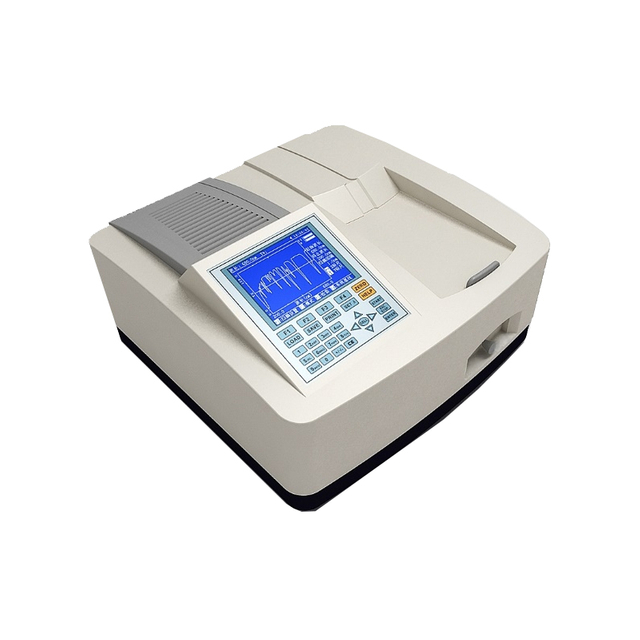
Spectrophotometers typically measure light in three main ways: absorbance, transmittance, and reflectance. Each type provides valuable data for specific analytical needs.
Measurement Type | Description | Application Example |
Absorbance | Measures how much light is absorbed by the sample. | Used in chemical and biological analysis to determine the concentration of substances. |
Transmittance | Measures how much light passes through the sample. | Useful for determining transparency in materials, such as liquids or gases. |
Reflectance | Measures the light reflected from the surface of the sample. | Applied in material science to analyze surface properties and texture. |
These measurements are essential for understanding how substances interact with light, allowing researchers to gather data on a sample's composition and structure.
Selecting the appropriate wavelength is crucial when using a spectrophotometer. Different substances absorb light at different wavelengths, and the correct wavelength must be chosen to achieve accurate results. For instance, proteins often absorb light strongly at 280 nm, while DNA and RNA are most efficiently measured at 260 nm.
Substance | Optimal Wavelength (nm) |
Proteins | 280 nm |
DNA/RNA | 260 nm |
Nucleic Acids | 260 nm |
Advanced spectrophotometer models offer customizable wavelength settings, enabling users to select the optimal range for their specific needs. Whether studying molecular interactions or conducting routine quality control, the ability to fine-tune wavelengths ensures precision and reliability in various analytical settings.
Modern spectrophotometers provide advanced features like flexible spectral bandwidth options, making them suitable for a wide range of applications. These instruments allow users to measure absorbance, transmittance, and reflectance across a broad spectrum of wavelengths, enhancing their capability to conduct detailed and accurate analyses.
For example, ultra-micro spectrophotometers are ideal for applications requiring small sample volumes, such as DNA, RNA, and protein analysis. These instruments provide precise measurements at both high sensitivity and small sample volumes, with a spectral range from 190–840 nm. This flexibility makes them a powerful tool in research environments where small amounts of sample material are common, and high accuracy is critical.
In addition, UV-VIS spectrophotometers support both single and double beam configurations, offering users the versatility to select the setup that best fits their analytical requirements. Whether you need detailed molecular research or high-throughput testing, these spectrophotometers are designed to meet the demands of various laboratory applications.
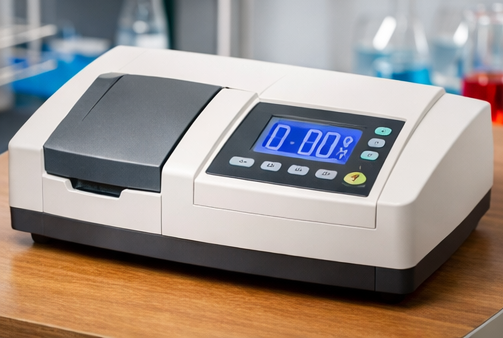
A single beam spectrophotometer is designed to measure the amount of light absorbed or transmitted by a sample by passing light through the sample and measuring how much light is transmitted or absorbed. The instrument typically consists of four main components:
Component | Function |
Light Source | Provides the light that passes through the sample. |
Monochromator | Selects specific wavelengths of light for measurement. |
Sample Compartment | Holds the sample in place for measurement. |
Detector | Measures the amount of light that passes through or is absorbed by the sample. |
This simple design makes it easy to operate and cost-effective, especially for routine measurements.
Pros | Cons |
Simplicity: Fewer components make them easy to use and operate. | Reduced Stability: Fluctuations in the light source or detector affect accuracy. |
Cost-effectiveness: Single beam models are less expensive compared to double beam models. | Manual Calibration: Frequent calibration is necessary, which may introduce errors. |
Ease of Use: User-friendly interfaces and intuitive operation. | Limited Precision: Not suitable for high-precision applications like pharmaceutical testing. |
Single beam spectrophotometers are widely used in industries and applications where high throughput and simplicity are essential but maximum precision is not required.
● Food and Beverage Industry: Commonly used for measuring color and concentration of liquids, ensuring consistency in production.
● Cosmetics: Used for routine analysis of ingredient concentration and quality control.
● Environmental Monitoring: Frequently employed for testing water samples and checking for contaminants.
● Educational Labs and Research: Ideal for basic spectroscopy in academic settings and teaching environments.
Their cost-effectiveness and ease of use make single beam spectrophotometers a great fit for these industries, where routine testing is needed without the need for extremely high accuracy.
A double beam spectrophotometer is designed to measure light absorption or transmission by comparing two separate beams: one passing through the sample and the other through a reference solution. This design allows for simultaneous measurement of both beams, enabling continuous compensation for any variations in the light source or detector.
The instrument typically consists of the following components:
Component | Function |
Light Source | Provides the light directed through the sample and reference beam. |
Monochromator | Selects specific wavelengths of light for measurement. |
Sample Compartment | Holds the sample for measurement while the reference beam passes through a reference solution. |
Detector | Measures the light intensity from both the sample and reference beams simultaneously. |
This design ensures improved accuracy and stability during measurements, making it ideal for applications where precision is essential.
Pros | Cons |
Enhanced Accuracy: Simultaneous measurement of both beams compensates for fluctuations in the light source or detector. | Higher Cost: More expensive than single beam models due to additional components. |
Better Stability: Continuous comparison reduces errors, providing more reliable results. | Complex Operation: Requires more technical understanding and training compared to single beam models. |
Compensation for Drift: The ability to measure both the sample and reference beams at the same time minimizes the need for manual calibration. | Maintenance Requirements: Additional components require regular maintenance and calibration. |
Double beam spectrophotometers offer significant improvements in measurement stability and accuracy but come at a higher cost and with more complex operation.
Double beam spectrophotometers are essential in applications requiring high precision and stable performance over long measurement periods.
● Quantitative Analysis: Widely used in pharmaceutical and chemical research where accurate concentration measurements are required for reliable results.
● Spectral Scanning: Ideal for research applications that need detailed analysis across a wide range of wavelengths, such as molecular research and environmental monitoring.
● Environmental Monitoring: Commonly used in the field to measure trace substances and pollutants in various environmental samples, providing precise data for regulatory compliance and environmental health assessments.
The high accuracy and stability of double beam spectrophotometers make them invaluable in industries where data reliability is critical, such as pharmaceuticals, environmental testing, and advanced scientific research.
The core distinction between single beam and double beam spectrophotometers lies in their beam configuration and how they process the light signals. A single beam spectrophotometer uses a single light path that passes through the sample. The intensity of light that emerges is measured by the detector, but it only compares this single beam to a reference solution in a separate step.
In contrast, a double beam spectrophotometer uses two beams: one that passes through the sample and one through a reference solution. Both beams are measured simultaneously by the detector. This continuous comparison between the sample and reference beams enhances the accuracy of the measurements by compensating for any fluctuations in the light source or detector over time.
Configuration | Single Beam | Double Beam |
Light Beams | One beam passes through the sample. | Two beams: one passes through the sample, one through the reference. |
Signal Comparison | Requires separate comparison with reference. | Continuous real-time comparison of both beams. |
Signal Processing | Manual adjustments required for fluctuations. | Automatic compensation for fluctuations. |
The configuration of the spectrophotometer directly impacts its accuracy and precision. A single beam system requires manual adjustments to account for any instability in the light source or detector. This can introduce errors, especially when conducting long-duration measurements or in environments where conditions fluctuate, such as industrial labs.
On the other hand, the double beam configuration offers enhanced stability. By comparing the sample and reference beams simultaneously, the instrument can automatically compensate for any fluctuations or drift in the system, maintaining accuracy throughout the measurement process. This results in more precise and reliable readings, especially when working with complex or sensitive samples.
Measurement Aspect | Single Beam | Double Beam |
Accuracy | Requires manual recalibration to account for fluctuations. | Automatically adjusts for variations in light source or detector. |
Stability | Can be affected by drift or fluctuations in the system. | Provides consistent, stable measurements. |
Precision | Less accurate in long-duration or complex measurements. | High precision, ideal for long-duration or complex analyses. |
Single beam spectrophotometers are suitable for applications where high throughput and simplicity are prioritized over maximum precision. Industries such as food and beverage, cosmetics, or education often use single beam spectrophotometers for routine measurements that don't require the highest accuracy.
In contrast, double beam spectrophotometers are ideal for applications where precision is critical. These instruments are frequently used in:
● Quantitative Analysis: Pharmaceutical and chemical industries rely on double beam spectrophotometers for accurate concentration measurements.
● Spectral Scanning: Used in research applications, such as molecular biology and environmental monitoring, where precise data across a range of wavelengths is essential.
● Long-duration Measurements: In industries where stability and accuracy must be maintained over time, such as environmental testing.
Application | Single Beam | Double Beam |
Routine Measurements | Suitable for industries like food, cosmetics, and education. | Less suitable due to cost and complexity. |
High-Precision Analysis | Limited by accuracy and drift. | Ideal for industries requiring high accuracy, such as pharmaceuticals. |
Long-Duration Studies | May introduce errors due to drift. | Perfect for continuous monitoring and stability over time. |
Some UV-VIS spectrophotometers offer both single and double beam configurations, providing a versatile solution for different types of analyses. Depending on the user's needs, they can choose the simpler, cost-effective single beam option for routine tasks or opt for the double beam configuration when high precision is required. This adaptability makes UV-VIS spectrophotometers suitable for a wide range of applications, from basic quality control to advanced research.
Having the option to select between beam configurations ensures flexibility and allows laboratories and researchers to optimize their workflow based on the specific demands of their tests.
When choosing a spectrophotometer, several key factors need to be taken into account, including budget, application, and precision requirements.
Factor | Single Beam Spectrophotometer | Double Beam Spectrophotometer |
Budget | More affordable due to simpler design. | More expensive due to added features and components. |
Application | Ideal for routine tasks such as color testing or basic absorbance. | Best suited for high-precision tasks like molecular analysis or environmental monitoring. |
Precision | Suitable for less critical applications where slight variations are acceptable. | Provides superior accuracy, ideal for tasks requiring high precision and reproducibility. |
The choice of spectrophotometer depends largely on the specific requirements of your analysis. If your budget is limited and precision is not critical, a single beam spectrophotometer may be sufficient. However, if your work demands high accuracy, such as in pharmaceutical or chemical research, the extra investment in a double beam spectrophotometer would be beneficial.
Spectrophotometers are used across various environments, and their performance needs can differ significantly depending on whether they are employed in a laboratory or industrial setting.
● Double beam spectrophotometers are ideal for research and lab environments, where precision and reproducibility are paramount.
● They are commonly used for quantitative analysis, molecular interaction studies, and chemical composition analysis, where consistent and highly accurate measurements are crucial.
● These instruments allow for detailed spectral analysis across various wavelengths, making them versatile for complex lab applications.
● For industrial environments, single beam spectrophotometers are often preferred due to their simplicity and cost-effectiveness.
● They are widely used for routine quality control, process monitoring, and material testing, where quick, reliable measurements are needed, but minor inaccuracies can be tolerated.
● However, for industries that require higher precision, such as pharmaceutical manufacturing or environmental testing, double beam spectrophotometers offer more reliable and stable performance.
The ease of operation and maintenance is another factor to consider when selecting a spectrophotometer. The complexity of the instrument can influence both the frequency of maintenance and the level of expertise required for operation.
Aspect | Single Beam Spectrophotometer | Double Beam Spectrophotometer |
Ease of Use | Simple design, user-friendly interface, minimal training required. | More complex operation with additional components; requires specialized training. |
Maintenance | Lower maintenance needs, less frequent calibration. | Requires regular calibration and maintenance due to more components. |
Calibration | Occasional recalibration may be required, but it is straightforward. | More frequent and precise calibration needed to maintain accuracy. |
Single beam spectrophotometers are generally easier to use and maintain, making them a good choice for high-throughput environments. On the other hand, double beam spectrophotometers require more upkeep but provide more stable and accurate results, especially in high-precision tasks.
Some modern UV-VIS spectrophotometers, such as those offered by Zhuoguang, provide the flexibility to choose between single and double beam configurations. This adaptability allows users to select the configuration that best suits their needs:
● Single beam configurations are perfect for everyday tasks that do not require the highest accuracy but demand quick and simple measurements.
● Double beam configurations are ideal for applications where precision and stability are essential, such as molecular biology, environmental monitoring, and chemical research.
By offering both options, Zhuoguang's spectrophotometers provide versatility that caters to various research and industrial needs, ensuring that users can find a solution tailored to their specific requirements. Whether you are handling small sample volumes in a lab or performing high-throughput testing in an industrial environment, these instruments offer the right combination of performance, reliability, and flexibility.
In this article, we explored the differences between single beam and double beam spectrophotometers. Single beam spectrophotometers are simple and cost-effective, while double beam models offer enhanced accuracy and stability. The choice depends on factors such as precision, application, and budget. For high precision in research and industrial applications, Shanghai Zhuoguang Instrument Technology Co., Ltd. provides reliable spectrophotometers that cater to various needs with high accuracy and user-friendly features.
A: A single beam spectrophotometer uses one beam of light, making it simpler and more cost-effective for routine measurements. A double beam spectrophotometer measures two beams simultaneously, offering enhanced accuracy and stability, ideal for more complex analyses in industries like pharmaceuticals or chemical research.
A: A double beam spectrophotometer should be preferred when high accuracy and stability are required for long-duration or precise measurements, such as in quality control for critical applications or scientific research where sample consistency is essential.
A: Double beam spectrophotometers require more frequent calibration and maintenance due to their complex design. In contrast, single beam models are simpler and demand less upkeep, making them more suitable for environments with high throughput but less critical accuracy.
A: Single beam spectrophotometers are typically more affordable, making them suitable for routine tasks. Double beam spectrophotometers, due to their enhanced precision, come at a higher cost but are better suited for high-accuracy industrial applications.


